6 Ways to Promote Your Fellowship Program and Reach Hidden Applicant Pools

Proven Tactics to Expand Your Fellowship's Reach and Attract Overlooked Talent
6 Ways to Promote Your Fellowship Program and Reach Hidden Applicant Pools
Fellowships empower future leaders, researchers, and innovators, yet many programs still struggle to attract qualified applicants. The issue often isn't the opportunity itself, but visibility and access. To recruit fellowship applicants effectively, program managers need to move beyond traditional outreach and tap into new, often overlooked audiences.
Here's how to promote your fellowship program strategically and reach those hidden applicant pools.
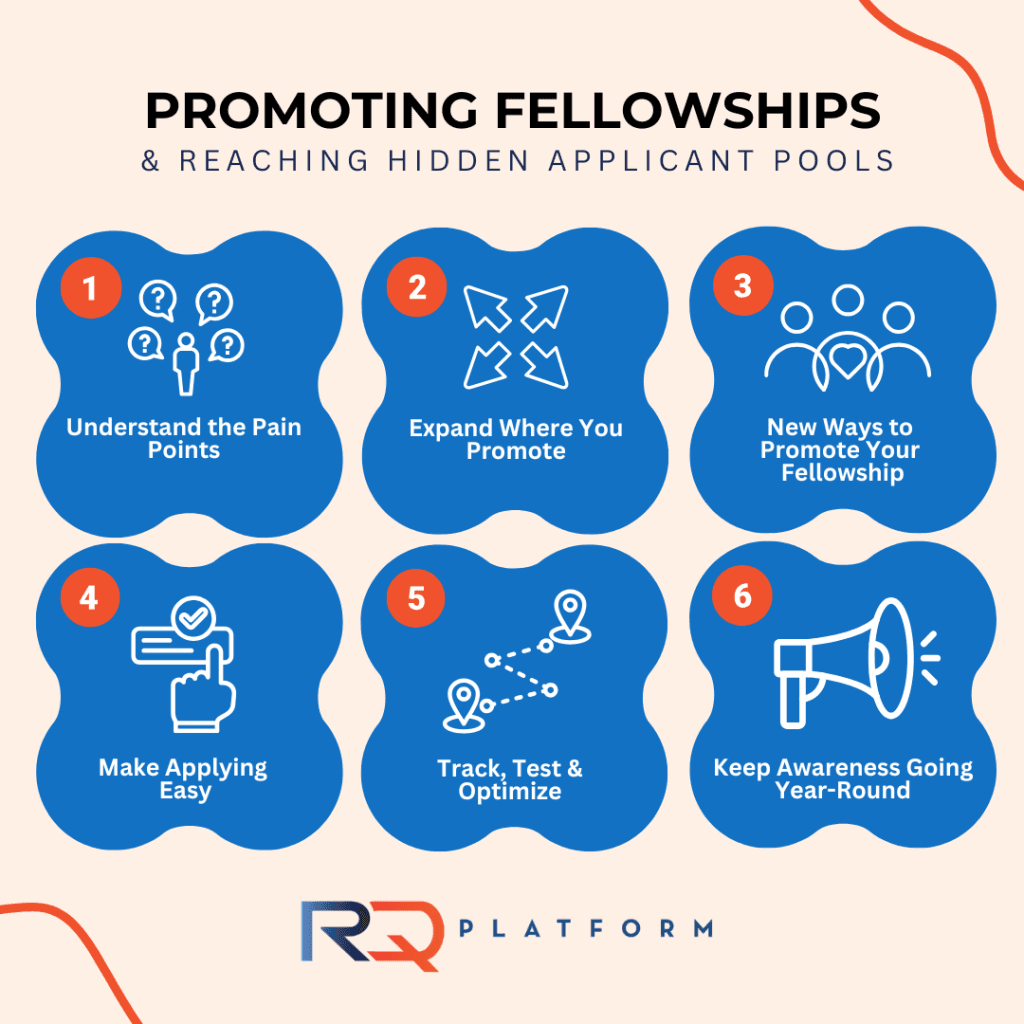
1. Understand the Pain Points
Most fellowship coordinators face the same barriers:
Low awareness: Many candidates don't realize they qualify, or assume fellowships are only for academics.
Limited reach: Depending solely on partner universities or mailing lists misses mid-career and community-based professionals.
Complex applications: Long or confusing forms discourage completion.
Late promotion: Marketing that starts close to the deadline leaves little time for organic discovery.
Recognizing these pain points is the first step toward building a stronger, more diverse recruitment strategy. (Source: ProFellow)
2. Expand Where You Promote
Hidden applicant pools exist everywhere: in professional associations, community networks, and online forums.
Partner with diversity networks, alumni groups, and professional associations to amplify your call for applications.
List your program on dedicated fellowship and scholarship directories.
Leverage social channels: join conversations in LinkedIn groups or discipline-specific hashtags on X (Twitter).
Use targeted ads to reach specific roles or locations, professional networking platforms allow precise segmentation by role, industry, and location.
3. New Ideas to Promote Your Fellowship
Ready to reach beyond the obvious audiences? Try these low-cost strategies to increase reach and engagement:
Micro-target local or underrepresented communities: Partner with regional professional associations, community colleges, or advocacy organizations to reach candidates who might not be on your email lists.
Referral-incentive programs: Encourage current fellows or alumni to recommend peers from diverse backgrounds. Offer small recognition, mentorship opportunities, or spotlight features as incentives.
Interactive prep tools: Add a self-assessment quiz or checklist to your website ("Am I ready for this fellowship?") to help potential applicants see themselves in the role.
Peer-ambassador content: Feature short videos or Q&As from past fellows answering "What I wish I knew before applying."
Localized outreach: Translate your fellowship page into additional languages if international or bilingual applicants are welcome.
Global info sessions: Host virtual Q&As across multiple time zones and record them for on-demand viewing.
These fresh ideas build on proven recruitment principles, combining accessibility, storytelling, and community engagement to expand your applicant reach.
4. Make Applying Easy
Even the best outreach fails if the application process feels like a barrier. Simplify and clarify each step:
Create a centralized, mobile-friendly portal (similar to those powered by RQ Platform) with built-in guidance, clear instructions, and progress tracking.
Include FAQs, sample responses, and "save and return" features to reduce frustration.
Send automated reminders and confirmation emails to reassure applicants their submission was received.
RQ Platform Tip, Streamline Your Follow-Up: With RQ SmartTracker™, program managers can easily collect post-submission information such as follow-up reports, impact surveys, or outcome data from fellows. It helps programs stay connected with recipients long after the application cycle closes, ensuring consistent follow-up and long-term reporting without manual tracking.
5. Track, Test, and Optimize
Use analytics to understand what's working and where candidates drop off.
Monitor which channels and messages drive the most completed applications.
Identify application stages with high abandonment and simplify them.
Compare results year-over-year to refine strategy.
RQ Platform Tip, Gain Clarity with Web Analytics Integration: With RQ Platform's Web Analytics integration (Google's GA4), program managers can see exactly how applicants move through the process, from discovery to submission. This integration connects website engagement data with application activity, helping teams identify where users drop off, which campaigns convert best, and where to focus efforts for the next cycle.
6. Keep Awareness Going Year-Round
Promoting fellowship programs shouldn't stop once the cycle closes.
Highlight alumni success stories on your website and social media.
Host short "Ask a Fellow" webinars throughout the year.
Keep your fellowship page live and optimized for SEO so potential applicants can discover it anytime.
Add a mailing list sign-up form on your fellowship page for people who want to know when the next call for applications opens.
Consistent storytelling keeps your program top-of-mind and builds a steady stream of new, diverse applicants for the next round.
Frequently Asked Questions
Why do qualified candidates miss fellowship opportunities?
Most often it's a visibility problem, not a fit problem. Candidates may not realize they qualify, assume fellowships are only for academics, or simply never see the opportunity because outreach relied on a narrow set of channels like partner universities or existing mailing lists.
What's the fastest way to reach applicants outside our usual networks?
Partnering with diversity networks, professional associations, and community organizations tends to surface candidates faster than broad advertising, since these groups already have trust with the audience you're trying to reach.
How early should fellowship promotion start?
Promotion that begins well before the deadline gives candidates time to discover the opportunity organically, ask questions, and complete a thoughtful application, late promotion mainly reaches people already looking, not the hidden pool of qualified candidates who aren't.
Does the application process itself affect how many people apply?
Yes. Long or confusing forms, unclear instructions, and no way to save progress are common reasons qualified candidates abandon an application partway through, regardless of how strong the outreach was.
Should fellowship promotion continue after the application deadline passes?
Yes. Keeping alumni stories, webinars, and an optimized program page active year-round keeps the program discoverable and builds a stronger applicant pool for the next cycle, instead of starting outreach from zero each time.
Conclusion
Reaching hidden applicant pools comes down to combining data-driven insight, inclusive storytelling, and a genuinely easy application experience. Programs that rely solely on the same universities, mailing lists, and late-cycle promotion will keep missing qualified candidates who were never in the room to begin with. Widening the channels you promote through, simplifying the path to apply, and tracking where candidates drop off turns fellowship recruitment from a yearly scramble into a system that keeps improving.
READY TO SIMPLIFY YOUR PROGRAM?
Your Program Deserves Better Than Spreadsheets.
RQ Platform brings applications, reviews, communications, reporting, and program management together—so your team can spend less time on admin and more time creating impact.