Volunteer Recruitment & Selection: Building a Fair, Data-Driven Process

How to build a clear, consistent, and data-driven process for recruiting and selecting volunteers.
Volunteer Recruitment & Selection: Building a Fair, Data-Driven Process
Recruiting volunteers is more competitive than ever. With nonprofits, associations, educational institutions, and community programs all seeking engaged volunteers, you need a recruitment process that is clear, fair, and efficient. A strong volunteer selection system doesn't just improve participation, it strengthens trust, retention, and long-term engagement.
Modern organizations are shifting toward data-driven volunteer recruitment software to streamline applications, screen candidates effectively, and ensure fair selection across all roles.
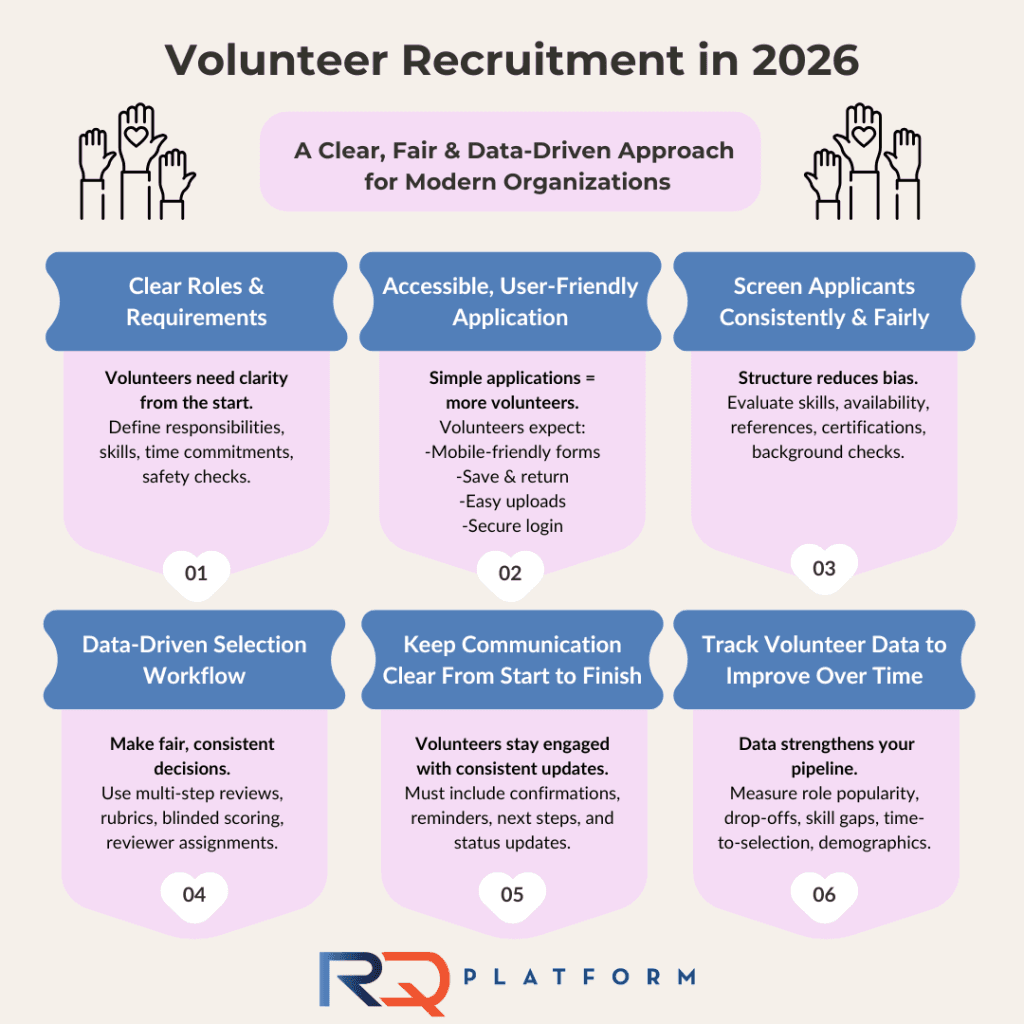
Why a Structured Volunteer Recruitment Process Matters
Volunteers want clarity. They want to understand what roles are available, what the expectations are, and how decisions are made. Research from volunteer management organizations shows that volunteers are more likely to commit long-term when:
The application process is simple
Expectations are clearly defined
Communication is consistent
Screening and selection feel fair
Skills and interests are matched purposefully
A transparent, data-informed process increases participation and boosts volunteer satisfaction, both essential to sustaining any program.
1. Define Clear Roles and Requirements
Before recruitment begins, organizations need to define:
Volunteer responsibilities
Skill or certification requirements
Time commitments
Any safety or screening needs
Role-specific prerequisites
Clear role definitions reduce confusion and help applicants self-select into positions that fit their experience and goals.
How RQ Platform supports this: RQ Platform allows programs to build custom volunteer application forms, set eligibility screening rules, and use conditional form logic so applicants only see positions they qualify for.
2. Create an Accessible, User-Friendly Application Experience
A complicated or outdated application process discourages volunteers. Volunteers expect:
A mobile-friendly form
A short, intuitive application
The ability to save and return
Easy file uploads
A secure login process
RQ Platform capabilities include: Applicant portal, Single sign-on (SSO), File uploads, E-signatures, Custom-branded landing pages, Form Builder and many more. This helps increase completion rates and expand your volunteer pool.
3. Screen Applicants Consistently and Fairly
To reduce bias and promote fairness, screening should be structured, not subjective. Consistent criteria ensure a transparent process and give organizations a more complete understanding of who is applying.
Programs often evaluate:
Skills and experience
Professional or personal references
Certifications or training
Availability
Background checks (when applicable)
RQ Platform supports this with: Eligibility screening, form logic for role-based questions, document uploads, E-reference requests. Everything is captured in one place, reducing manual follow-up.
4. Use a Data-Driven Selection Workflow
After screening, organizations must review applications efficiently and fairly.
A structured volunteer selection process might include:
Multi-step review (admin review → committee review → final approval)
Scoring or rubric-based evaluation
Blinded reviews when needed
Reviewer assignments
Internal comments or notes
RQ Platform provides: Multi-phase review, blinded review options, reviewer groups and assignments, custom rubrics, audit trails for transparency. This ensures selection decisions are consistent, documented, and aligned with volunteer role requirements.
5. Keep Communication Clear from Start to Finish
Volunteers are far more likely to complete onboarding when they receive timely updates. Your process should include:
Confirmation emails
Reminders for missing documents
Status updates
Next steps (orientation, training, etc.)
With RQ Platform: Automated emails, status notifications, scheduled reminders. Consistent communication strengthens trust and improves the volunteer experience.
6. Track Volunteer Data for Continuous Improvement
A data-driven volunteer program is a sustainable one. Understanding your recruitment patterns helps you refine the process year after year.
Insights may include:
Which roles attract the most applicants
Skill gaps
Drop-off points in the application process
Time-to-selection
Demographic trends (if applicable)
Orientation and training completion rates
RQ Platform offers: Custom reports, administrator dashboards, application tagging, google analytics integration, RQ SmartTracker™ for post-program follow-up. These insights help organizations grow their volunteer pipeline with confidence.
Why Volunteer Recruitment Software Strengthens Your Program
A modern volunteer management system delivers:
Higher volunteer participation: easier applications lead to more completed submissions.
Greater fairness and transparency: structured screening and scoring reduce bias.
Less administrative work: automation removes manual tasks and email chasing.
Better matching of volunteers to roles: structured data improves role-specific selection.
Stronger long-term engagement: clear expectations and communication encourage retention.
Why Organizations Choose RQ Platform for Volunteer Recruitment
RQ Platform centralizes your entire volunteer recruitment and selection workflow:
Custom application forms
Eligibility logic
Reference checks
Blinded or open reviews
Rubric-based scoring
Automated communication
Unlimited volunteers, reviewers, and administrators
Reporting dashboards and analytics
Whether you're managing community volunteers, event volunteers, student volunteers, or highly skilled program-based roles, RQ Platform makes recruitment fair, consistent, and data-driven.
Frequently Asked Questions
What is volunteer recruitment software?
Volunteer recruitment software like RQ Platform helps organizations manage volunteer applications, screening, reviews, and approvals in one centralized, digital platform.
How does volunteer application management improve fairness?
By using consistent screening criteria, structured reviews, and automated workflows that reduce bias and human error.
What features should a volunteer recruitment platform have?
Eligibility checks, custom forms, multi-phase reviews, automated communication, reporting, and secure login.
How does RQ Platform support volunteer selection?
With eligibility screening, multi-step reviews, rubrics, reference checks, automated emails, dashboards, and audit trails.
How is a data-driven volunteer selection process different from a traditional one?
A traditional process often relies on informal or inconsistent screening, which makes fairness harder to demonstrate. A data-driven process uses structured criteria, scoring, and documentation at every step, so decisions are consistent and easier to explain if questioned.
Conclusion
Volunteer recruitment doesn't have to be a trade-off between speed and fairness. A structured, data-driven process, clear role definitions, consistent screening, documented decisions, and steady communication makes it possible to move quickly without cutting corners on transparency. Organizations that treat volunteer selection with the same rigor as any other review process tend to see the payoff where it matters most: stronger applicant trust, better-matched volunteers, and higher long-term retention.
READY TO SIMPLIFY YOUR PROGRAM?
Your Program Deserves Better Than Spreadsheets.
RQ Platform brings applications, reviews, communications, reporting, and program management together—so your team can spend less time on admin and more time creating impact.