Why Grant Reporting Falls Apart in the Post-Award Phase and How to Prevent It

How to design post-award reporting into your grant program from the start, instead of fixing it after the fact
TL;DR
Grant reporting breaks down when it isn't planned early enough. Programs that design post-award reporting alongside applications, setting expectations, timelines, and structure upfront are far more successful at tracking outcomes and demonstrating impact.
Grant leaders already understand the challenges of post-award reporting. The real value lies in preventing those challenges from happening in the first place.
Instead of spending time rehashing what goes wrong, this guide focuses on the practical steps that keep reporting on track without adding complexity to your team's day-to-day work.
What the Post-Award Phase Actually Requires
The post-award phase begins once funding decisions are made and continues through reporting, monitoring, and closeout.
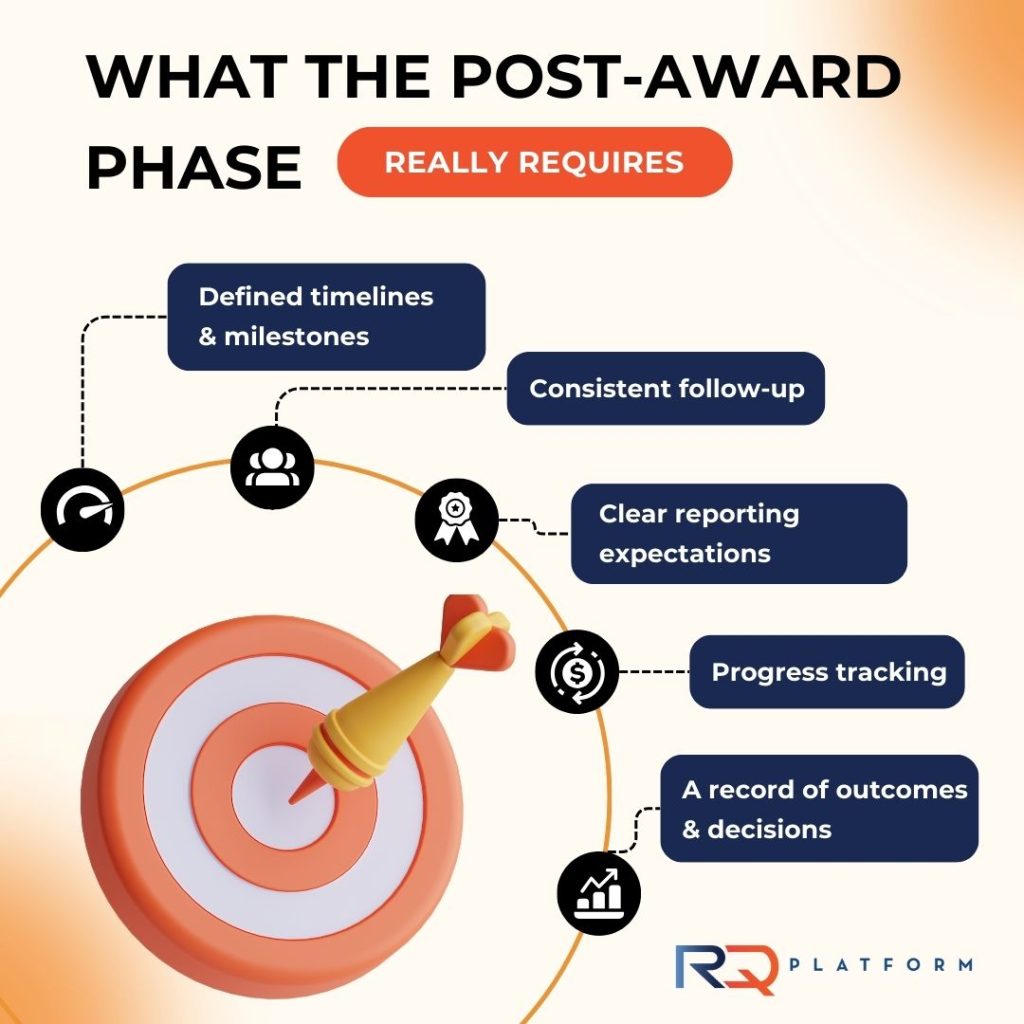
At a minimum, this phase requires:
Clear reporting expectations
Defined timelines and milestones
Consistent follow-up
A way to track progress and submissions
A record of outcomes and decisions
When these elements are planned early, reporting becomes routine rather than reactive.
The Key to Preventing Post-Award Reporting Issues
The most effective grant programs share one trait: they design reporting as part of the program, not as a follow-up task. Here's how they do it.
1. Build Post-Award Reporting Into the Application Process
Strong reporting starts before awards are announced.
During the application stage:
Applicants are told what they will need to report if funded
Reporting timelines are shared upfront
Outcomes and goals are clearly defined
This ensures that reporting later feels expected and aligned, not confusing or burdensome.
How RQ Platform helps: RQ Platform carries application data forward into the post-award phase, so reporting requirements and original goals don't get lost once awards are made.
2. Keep Reporting Connected to Original Goals
Post-award reporting works best when it directly reflects what was proposed.
Effective programs:
Tie reports back to application goals
Track progress against stated outcomes
Use consistent data points from application through closeout
This creates a clear, defensible narrative of program impact.
How RQ Platform helps: RQ Platform links reports directly to the original application, making it easier to track progress, outcomes, and impact in one continuous view.
3. Use Clear Timelines and Ownership
Reporting doesn't stall because teams don't care, it stalls when ownership and timing are unclear.
Successful programs:
Set reporting milestones early
Apply deadlines consistently across grantees
Assign clear responsibility for follow-ups
Use reminders instead of manual chasing
Structure improves follow-through without adding administrative burden.
How RQ Platform helps: RQ Platform supports scheduled reporting, reminders, and status tracking so teams don't have to rely on manual follow-ups or spreadsheets.
4. Make Reporting Easy for Grantees
The simpler reporting is, the more reliable the data.
Best practices include:
Asking only for information you plan to use
Avoiding repeated or overlapping questions
Clearly defining what a "complete" report looks like
Keeping reporting formats consistent
Clear expectations lead to better compliance and better insights.
How RQ Platform helps: RQ Platform provides structured, guided reporting forms that make it easier for grantees to submit accurate, complete information on time.
5. Keep Everything in One Place
As programs grow, spreadsheets and email become harder to manage.
Programs that stay on track use a single system to:
Monitor reporting status
Track submissions and deadlines
Maintain context from award through closeout
Provide visibility for leadership and funders
This eliminates guesswork and reduces time spent explaining what happened.
How RQ Platform helps: RQ Platform centralizes post-award reporting, progress tracking, and records in one place, reducing the time teams spend chasing updates or reconstructing what happened after the fact.
Common Questions About Post-Award Grant Reporting
When should grant programs start planning post-award reporting?
During the application stage, not after awards are announced. Telling applicants upfront what they'll need to report if funded and on what timeline makes reporting feel like a known expectation rather than a surprise burden later.
What's the most common reason grantee reports come in late or incomplete?
Unclear ownership and timing, more often than lack of effort. When reporting milestones, deadlines, and follow-up responsibility aren't clearly assigned from the start, reporting becomes something that gets chased rather than something that happens on schedule.
Does asking for less information hurt the quality of grant reporting data?
Generally, no. The opposite tends to be true. Asking only for information you actually plan to use, and avoiding repeated or overlapping questions, tends to produce more complete and more accurate reports than long, unfocused reporting forms.
Conclusion
Grant reporting doesn't fall apart because teams lack effort it falls apart when reporting isn't designed early enough. Programs that plan for post-award reporting from the start spend less time explaining issues and more time demonstrating impact. If your organization wants post-award reporting that's clear, consistent, and defensible, the fix usually isn't more effort from your team it's better structure built in from the beginning.
READY TO SIMPLIFY YOUR PROGRAM?
Your Program Deserves Better Than Spreadsheets.
See how RQ Platform connects application goals to post-award reporting automatically.